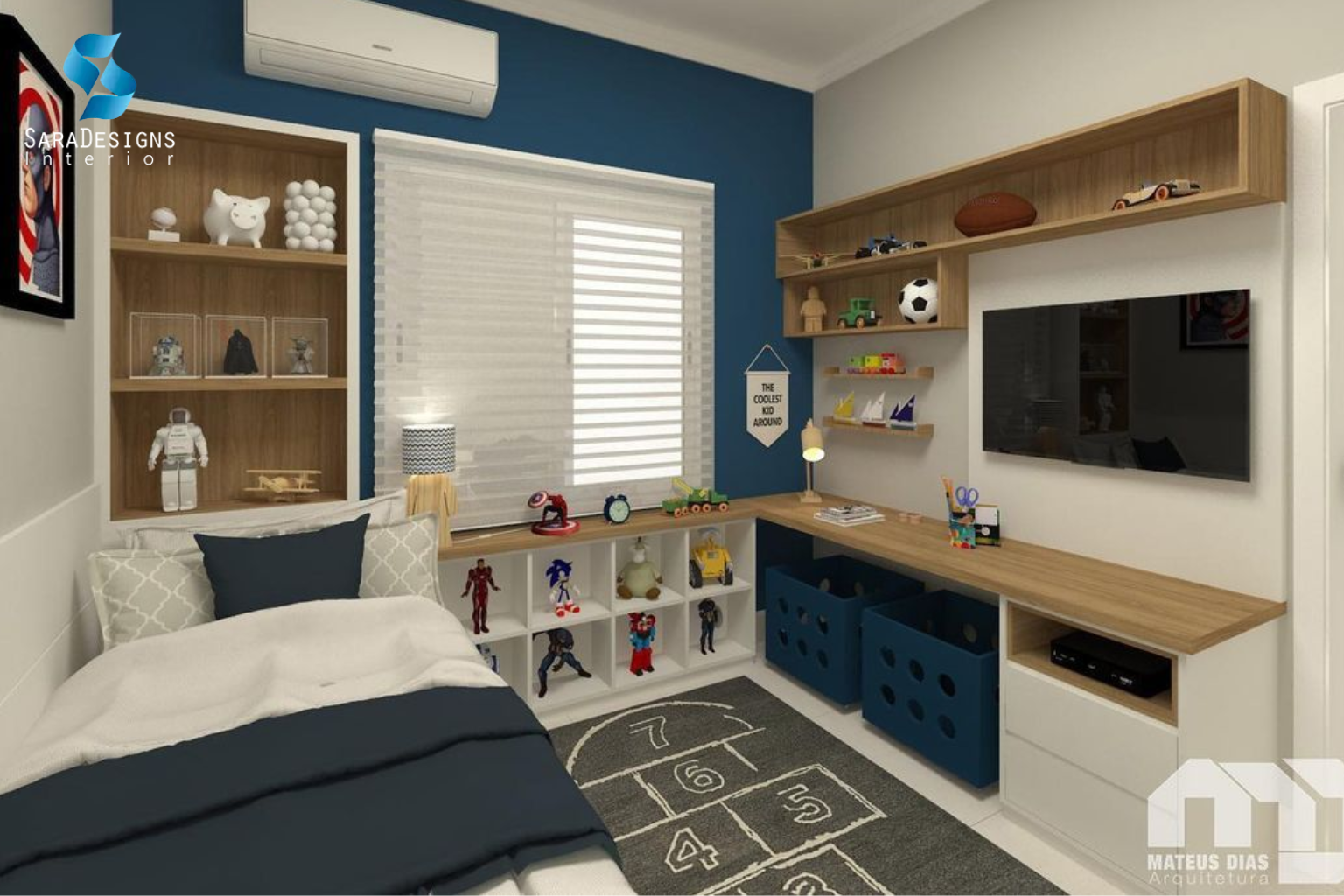
A child’s bedroom is not just another room in the house. It is their personal world — a place where imagination grows, homework happens, stories begin, and dreams take shape. That is why creating a simple kids room design is not about filling the space with colourful furniture or cartoon themes. Instead, it is about designing a calm, functional, and flexible environment that adapts as your child grows.
Whether you are working with a compact apartment bedroom or planning interiors for siblings sharing a space, smart layouts and thoughtful styling can make even small rooms feel bright, organised, and inspiring.
Start with Smart Planning for a Long-Lasting Kids Room Layout
The secret behind a successful kids bedroom design always begins with planning. Before selecting colours or furniture, think about how your child will use the room daily.
A well-planned simple kids room design usually includes three essential zones:
- Sleeping area
- Study corner
- Play space
These zones do not require separate rooms — just smart placement.
Choose furniture that grows with your child instead of age-specific pieces that quickly become outdated. Neutral beds, flexible study tables, and modular storage units are excellent long-term investments. When the base layout remains timeless, you can easily update the room through décor changes over the years.
Planning ahead also prevents clutter and keeps the room functional for longer.
Space-Saving Furniture Ideas for Small Kids Rooms
When designing small bedrooms for children, furniture should work harder and smarter.
Multifunctional furniture helps maximise available space without compromising comfort.
Some practical options include:
Beds with built-in storage drawers
Foldable study desks
Wall-mounted shelves
Loft beds with study units underneath
Compact wardrobes with vertical storage
These solutions create additional space for movement and play while keeping the room organised.
Choosing lightweight furniture in matching tones also makes the room feel visually larger and calmer.
Rounded edges, easy-clean surfaces, and child-friendly heights further improve usability and safety.

Smart Storage Ideas That Keep Kids Rooms Neat
One of the biggest challenges parents face is maintaining organisation in children’s rooms. Toys, books, art supplies, and clothes quickly pile up without proper storage planning.
A simple kids room design always includes accessible storage solutions.
Try incorporating:
Open shelves for storybooks
Storage baskets for toys
Under-bed drawers
Wall hooks for school bags
Modular cube storage units
Open storage helps children learn responsibility by encouraging them to organise their belongings independently.
Labelled baskets also make cleanup faster and more fun.
When storage becomes part of the design, clutter automatically reduces.
Choosing the Right Colours for a Calm Kids Room Environment
Colour plays an important role in shaping how a child experiences their room. While bright colours may seem exciting, too many bold shades can make small rooms feel crowded and overstimulating.
Instead, start with soft neutral tones such as
Warm white
Light grey
Beige
Pastel blue
Soft mint green
These colours create a soothing background that allows flexibility for future decor changes.
Accent shades can be introduced through bedding, cushions, rugs, artwork, or curtains.
This approach keeps the space lively without overwhelming the senses.
A balanced palette ensures the room remains stylish even as your child grows older.

Simple Decor Ideas That Add Personality Without Clutter
Decorating a kids’ room does not require heavy themes or excessive accessories. A few thoughtful additions can make the space feel special and personalised.
Consider adding:
Framed artwork created by your child
A soft rug for the play zone
Comfortable cushions and throws
Pinboards or display boards
Storybook shelves
Lighting also plays an important role in creating mood.
Use a mix of:
Ambient lighting for overall brightness
Study lamps for homework
Soft night lights for comfort
These layered lighting choices make the room feel warm and welcoming.
Budget-Friendly Personalisation Ideas for Kids Bedrooms
Parents often worry that designing children’s rooms requires frequent spending because preferences change quickly. However, smart styling allows easy updates without major investments.
Instead of creating a fixed theme, choose a flexible concept such as:
Nature inspiration
Space adventure
Animal patterns
Travel elements
Wall decals, cushions, bedding, and artwork can be changed easily as interests evolve.
DIY decor projects also add personality while keeping costs low.
Involving children in decorating decisions makes them feel connected to their space.
Simple Kids Room Design Ideas Based on Age Groups
Every age group has different needs. Designing according to your child’s stage helps create a practical and comfortable environment.
Toddlers (1–3 Years)
Safety is the top priority.
Use:
Soft flooring or rugs
Rounded furniture edges
Low storage units
Easy-reach toy shelves
Gentle colours create a nurturing environment.
Preschoolers (4–6 Years)
This age group enjoys creativity and activity.
Add:
Small craft tables
Reading corners
Open toy storage
Play rugs
Clear zones help maintain organisation.
School-Age Children (7–10 Years)
Study areas become essential during this stage.
Include:
Comfortable study desks
Ergonomic chairs
Bookshelves
Hobby display areas
Balanced colours improve focus and comfort.
Tweens (11+ Years)
Older children prefer more independence in their room styling.
Consider adding:
Pinboards for schedules
Lounge seating corners
Tech storage spaces
Statement walls or accent decor
Let them participate in design decisions.
Multifunctional Furniture Layout Ideas for Compact Bedrooms
Modern homes often require children’s bedrooms to serve multiple purposes within limited space.
A smart layout may include:
Loft bed with study desk below
Pull-out trundle beds for siblings
Built-in wardrobes with vertical storage
Wall-mounted desks
These combinations improve movement space and maintain a clean layout.
Such smart arrangements are especially helpful in urban apartments.

Designing a Shared Kids Room Without Making It Crowded
Shared bedrooms can still feel comfortable when planned correctly.
Use:
Bunk beds or twin bed layouts
Individual storage zones
Matching colour palettes
Personalised bedding
This approach creates balance between individuality and harmony.
Soft pastel shades work beautifully in shared rooms.
Modern Kids Room Design Ideas That Feel Fresh and Cheerful
Modern children’s bedrooms combine creativity with simplicity.
Some trending ideas include:
Chalkboard walls for drawing
Reading corners with cushions
Floating shelves
Accent wall stripes
Minimal study corners
These additions keep the space functional and visually exciting without overcrowding the room.
A cheerful yet organised environment supports learning and creativity together.
Creating a Kids Room That Grows with Your Child
The best children’s bedrooms are those that evolve naturally over time.
Choose:
Neutral furniture
Flexible layouts
Replaceable decor elements
Durable materials
These choices reduce redesign costs later.
A thoughtfully planned simple kids room design supports both childhood fun and future learning needs.
Conclusion
A well-designed children’s bedroom is not about perfection — it is about creating a safe, inspiring, and comfortable space where your child feels happy every day. With smart layouts, multifunctional furniture, soft colours, and flexible decor choices, even small bedrooms can become beautiful and practical personal spaces.
At Sara Designs Interior, we believe every child deserves a room that supports creativity, learning, and comfort while adapting easily as they grow. Thoughtful planning today can create a joyful environment your child will love for years to come.
Frequently Asked Questions
1. What is the most important factor to consider in a simple kids’ room design?
The most important factor in a simple kids’ room design is creating a space that is practical and easy to use every day. A well-planned layout with minimal furniture, smart storage options, and safe materials helps keep the room organised and comfortable. When the space feels open and clutter-free, children can play, study, and relax more easily while parents find maintenance much simpler too.
2. How can a small shared kids’ bedroom be designed in a simple and functional way?
Designing a shared children’s room becomes easier when you focus on space-saving furniture and organised storage. Bunk beds or pull-out beds help free up floor space, while under-bed drawers and wall-mounted shelves keep belongings neatly arranged. Using similar colour tones for bedding and furniture also creates a balanced and calm look, making the room feel bigger and more coordinated.
3. Which colour combinations work best for a simple gender-neutral kids’ room in Indian homes?
Soft neutral colours work beautifully for gender-neutral children’s rooms. Shades like warm white, beige, light grey, or pastel tones create a calm base for the space. You can then add cheerful accents through cushions, rugs, artwork, or curtains in colours such as mint green, mustard yellow, or sky blue. This keeps the room fresh, welcoming, and adaptable as your child grows.
4. How can you design a kids’ room that grows along with your child?
To create a room that stays useful for many years, choose furniture that can adapt over time. Convertible beds, adjustable study tables, and flexible storage units are great long-term choices. Keeping the base colours simple and timeless also makes it easy to update the room later with new décor items like cushions, wall art, or rugs as your child’s interests change.
5. What are some simple ways to decorate a kids’ room on a limited budget?
Decorating a kids’ room does not always require a large budget. Small changes like repainting old furniture, adding colourful cushions, using wall decals, or creating DIY artwork can make a big difference. Storage baskets, floating shelves, and soft rugs are affordable additions that improve both style and functionality without increasing costs significantly.
6. What are easy decor ideas that instantly improve a simple kids’ bedroom?
Simple decor choices can make a children’s bedroom feel more lively and personalised. Adding a few wall prints, displaying your child’s artwork, placing open bookshelves, or introducing soft string lights can instantly enhance the look of the space. These small details create a warm and cheerful environment while keeping the overall design clean and clutter-free.
Related Posts

- saraD
- February 21, 2026
How Much Does a Living Room Interior Design Cost in Gurgaon?
Your living room interior design is the very first impression your home creates. Whether it’s ..

- saraD
- June 2, 2025
Luxury Furniture Manufacturers on MG Road (Mehrauli-Gurgaon)
When creating luxurious, bespoke interiors, choosing the right furniture is as important as cho ..